Process Manufacturing ERP vs. Discrete: Keys to Choosing the Right Path for Alberta Manufacturing Plants
Manufacturers across Alberta face a decision that shapes their efficiency and future growth: selecting between a discrete or process manufacturing ERP system. This choice is foundational. It dictates how you manage production, track inventory, control costs, and maintain compliance. For operations leaders, CFOs, and IT leads, understanding the practical differences is critical to making a solution fit your real-world workflows.
Defining Discrete and Process Manufacturing
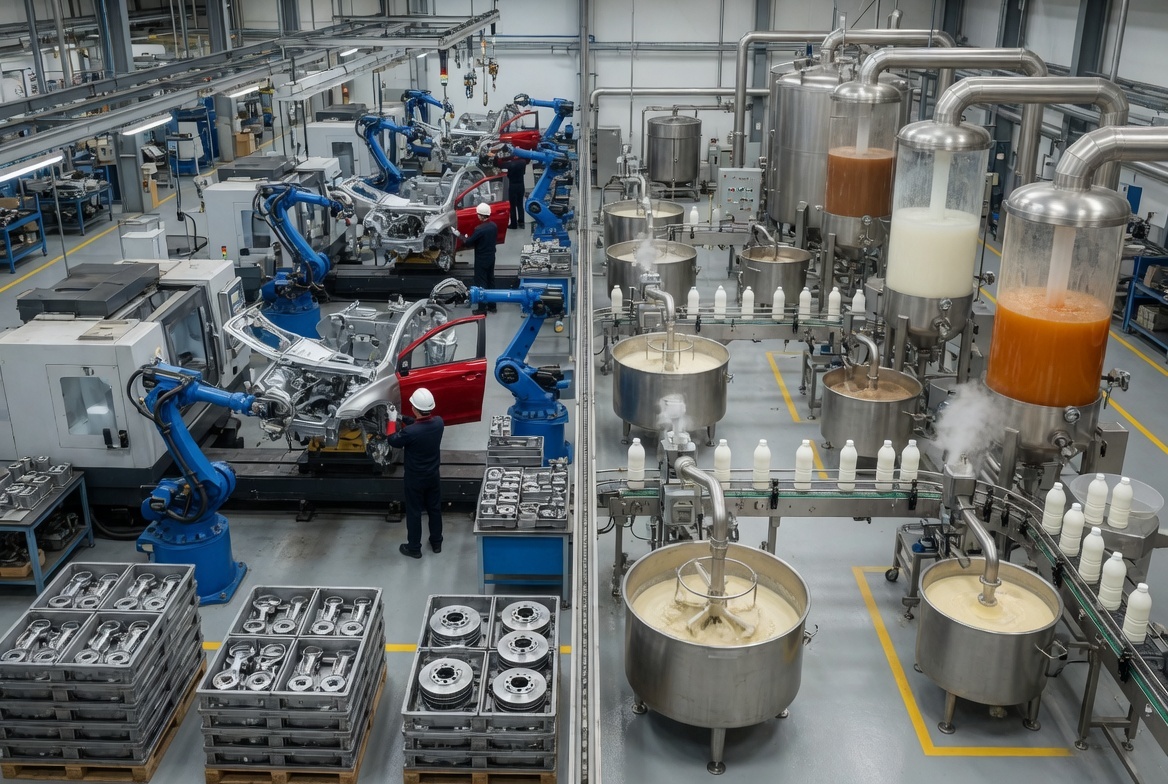
Discrete manufacturing involves assembling distinct items-think metal parts, machinery, or electronics. Every product is identifiable, and the bill of materials (BOM) defines each component. Examples include a metal fabrication plant tracking individual panels or brackets through the shop floor.
Process manufacturing, by contrast, transforms raw materials into finished goods via formulas or recipes. The output is often in bulk or batches, such as chemicals, food, or pharmaceuticals. Here, product identity is defined by lot, not by unique serial numbers. A food processor blending ingredients in batches with strict lot traceability is a typical example.
How ERP Supports Each Model
ERP systems must map to these core operational differences. Discrete manufacturing ERP systems focus on work orders, parts lists, and component-level traceability. It helps teams manage assembly steps, track inventory at the part level, and handle engineering changes efficiently.
Process manufacturing ERP, on the other hand, centers on formulas, batching, and compliance. It manages variable yields, lot tracking, and quality control at the batch level. For instance, a process ERP can track every ingredient lot in a batch of packaged foods, ensuring recall readiness and regulatory compliance.
Acumatica, when configured appropriately, supports both discrete and process manufacturing models. Choosing or customizing the right modules is key, and this is where a partner like Aqurus Solutions adds value through operational expertise and workflow analysis.
Costing and Inventory Controls: What Changes?
Cost control is a top concern for CFOs and operational leaders. Discrete manufacturing ERP typically uses standard or actual costing at the part level, supporting granular analysis. Process manufacturing ERP leans toward weighted average or batch costing, reflecting material blending and bulk output.
Inventory management also differs. Discrete ERP tracks each item through its lifecycle, enabling precise stock control and component traceability. Process ERP focuses on bulk or lot inventory, with strong support for expiry, quality, and regulatory requirements.
- Metal fabrication: Tracks each finished unit by serial number, parts consumed, and work order.
- Food processing: Tracks ingredients by lot, manages expiry, and records batch yields.
Aligning your ERP to these needs ensures accurate reporting and compliance, and prevents costly gaps in process visibility.
Workflow Assessment: Matching ERP to Real Operations
Successful ERP projects begin with a deep workflow assessment. Operations and IT leaders must map every step of the production and inventory process, identifying where the business needs discrete or process-oriented functionality.
Aqurus Solutions supports this by reviewing plant floor processes, analyzing current data flows, and evaluating how Acumatica modules can be tailored to each workflow. For example, a hybrid manufacturer may require both discrete and process features-such as a construction products plant that assembles precast components from batch-mixed concrete. The right ERP should address these operational realities, not force workarounds.
ERP Transitions: Minimizing Disruption
Moving to a new ERP system is never trivial. The risk of operational disruption can be significant if the solution does not fit your production model. COOs and IT leads must plan phased rollouts, validate data mapping, and train teams on new processes. Aqurus Solutions emphasizes a structured deployment strategy, focusing on workflow alignment and user adoption to keep production running smoothly.
Tailored Features That Drive Throughput
Modern ERP platforms like Acumatica offer modular functionality for both discrete and process manufacturing. Features such as automated work order generation, real-time inventory visibility, and batch tracking can be configured to support throughput goals and compliance needs. The key is to avoid a generic approach-every Alberta manufacturer has unique requirements that demand careful configuration and operational oversight.
Main Takeaway: Align ERP with Your Manufacturing Model for Lasting Results
Choosing between discrete and process manufacturing ERP is not just an IT decision-it is a strategic move that shapes your plant’s efficiency and profitability. An ERP aligned with your true production workflows will control costs, improve traceability, and support growth. Expert partners like Aqurus Solutions can guide Alberta manufacturers in selecting and implementing Acumatica ERP systems that fit both the shop floor and the bottom line.

 Murray Quibell

 Murray Quibell : Mar 14, 2023 1:20:15 PM