IIoT Integration and ERP Software for Manufacturing Industry: A Practical ROI Roadmap
Manufacturers and distributors in Western Canada are under constant pressure to improve operational efficiency, reduce downtime, and manage inventory more effectively. The challenge is not just technological but operational: disconnected systems, siloed data, and manual processes make it difficult to achieve real-time visibility into production and supply chain performance. As competition intensifies, the need to connect IIoT data with cloud ERP systems has become a critical priority for organizations seeking measurable ROI and sustainable growth.
The Operational Problem: Visibility Gaps and Inefficiency
Traditional manufacturing and distribution environments often rely on a patchwork of legacy systems. Production equipment may have sensors, but the data is trapped on the plant floor or in standalone applications. ERP systems may provide planning and financials, but lack real-time feeds from operations. This disconnect leads to several challenges:
- Unplanned downtime due to reactive maintenance, not predictive insights
- Inventory overages or shortages because on-hand quantities are delayed or inaccurate
- Missed opportunities to optimize throughput and reduce waste
- Manual data entry creating errors and delays in reporting
Without integrated IIoT and cloud ERP, the ability to respond quickly to equipment failures, demand changes, or quality issues is severely limited. The result is lost productivity, higher costs, and frustrated teams.
Why Disconnected Systems Limit ROI
Disconnected data sources create blind spots that affect every part of the operation. For example, vibration sensors installed on a critical machine might detect an impending failure, but if that alert is not communicated directly to the ERP system, maintenance teams will not be scheduled proactively. Similarly, inventory tracking systems that are not linked to central ERP cannot trigger automated reorder points, leading to stockouts or excess inventory.
- Process manufacturing lines risk batch loss from undetected equipment drift
- Discrete manufacturing teams miss early warning signs of quality deviations
- Warehouse cycle counting remains labor-intensive without sensor integration
The ability to connect IIoT sensor data with cloud-based ERP, such as Acumatica, closes these gaps and enables operational leaders to act on real-time information.
The Solution: Pairing IIoT Data with Cloud ERP
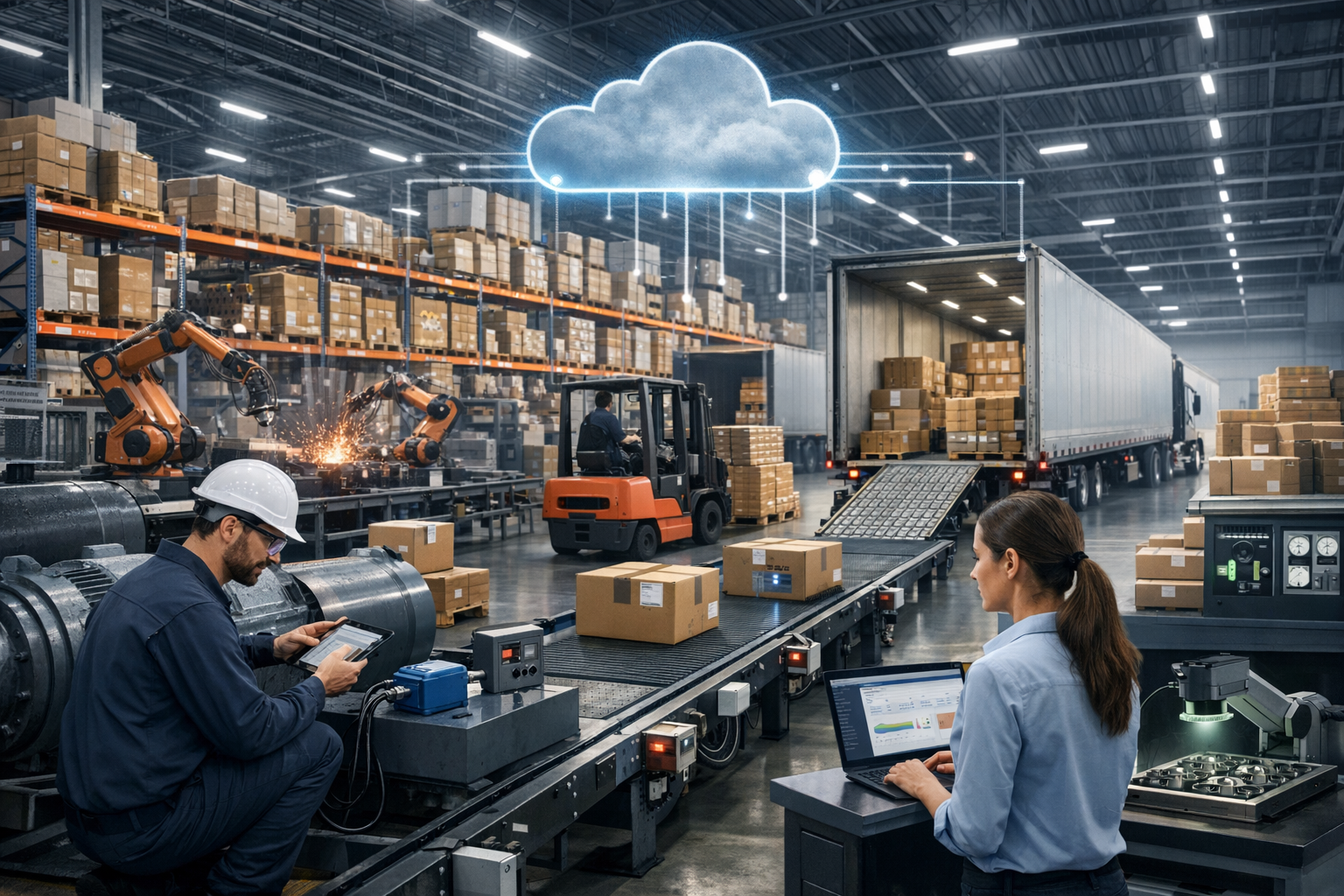
Integrating IIoT data with a cloud ERP platform provides a unified view of production, inventory, and warehouse operations. With Acumatica, organizations can:
- Stream sensor data directly into ERP modules for equipment health and energy monitoring
- Automate maintenance scheduling based on actual usage and predictive analytics
- Enable real-time inventory visibility and automate order points
- Track and analyze quality metrics from the shop floor to reduce scrap and rework
For example, by installing vibration sensors on high-value equipment, maintenance can be scheduled before failures occur, reducing costly downtime. IIoT-enabled quality checks ensure that products meet standards, lowering scrap rates in discrete manufacturing. Real-time cycle counts using warehouse sensors allow for more accurate inventory without manual intervention.
Evaluating Sensor and Integration Costs for ROI
To realize ROI, it is essential to evaluate both the direct and indirect costs of IIoT integration. Hardware investments (such as sensors for temperature, vibration, or energy usage) must be matched with integration planning and software configuration. Aqurus Solutions helps organizations assess:
- Which equipment or processes will benefit most from sensor deployment
- Expected downtime reduction and throughput gains
- Integration costs with Acumatica or other cloud ERP platforms
- Change management and training requirements for operational teams
By focusing on high-impact areas first, organizations can phase sensor rollouts and integration, minimizing disruption and controlling investment risk.
Phased Deployment: Managing Risk and Budget
Rolling out IIoT and cloud ERP integration in phases allows for incremental improvements and lessons learned. Start with a single production line or warehouse zone, measure the impact, and expand based on results. A typical phased approach might include:
- Piloting vibration sensors on bottleneck machinery
- Integrating real-time inventory data with Acumatica for automated replenishment
- Expanding to quality and energy monitoring based on initial ROI
This approach allows operations and IT to collaborate closely, ensuring that integration aligns with business goals and that teams are ready for new workflows.
Collaboration Between Operations and IT
Successful IIoT and ERP integration requires cross-functional collaboration. Operations leaders understand the process bottlenecks and pain points, while IT teams manage data integration and system security. By working together, they can prioritize sensor deployments, select appropriate integration tools, and ensure that cloud ERP configurations support operational needs. Aqurus Solutions facilitates these conversations, helping organizations align technology with real business outcomes.
Main Takeaway: IIoT and Cloud ERP Integration Delivers Measurable ROI
By strategically connecting IIoT data with cloud ERP platforms like Acumatica, manufacturers and distributors can achieve real-time visibility, reduce downtime, optimize inventory, and drive measurable ROI. A phased deployment, supported by collaboration between operations and IT, ensures that investments are aligned with business priorities and deliver sustained operational improvements.

 Murray Quibell

 Murray Quibell : Apr 24, 2026 10:16:08 AM