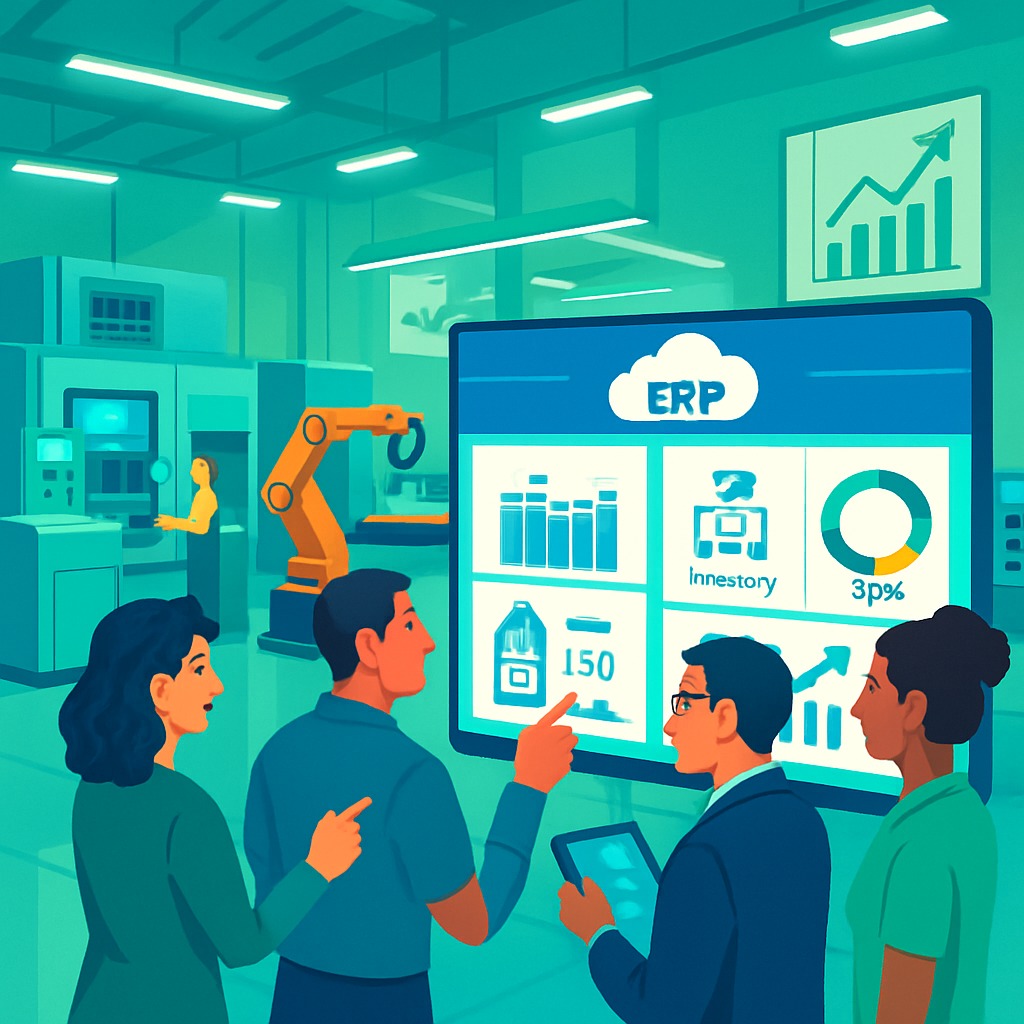
Manufacturers rarely replace an ERP system because it “stops working.” They replace it because it quietly becomes a constraint, slowing decisions, eroding margins, and forcing teams to work around it instead of with it.
If any of the issues below feel familiar, your manufacturing ERP may already be holding your business back.
1. You Don’t Have Real-Time Visibility Into Operations
Why this is a serious problem
Manufacturing decisions are time-sensitive. When inventory levels, production status, or order commitments are delayed by hours or even days, leaders are forced to manage by approximation instead of fact. This often results in:
-
Missed delivery dates
-
Overstocking or material shortages
-
Poor customer communication
-
Reactive firefighting instead of proactive planning
When visibility is delayed, every downstream decision becomes riskier.
How Acumatica addresses it
Acumatica is built as a real-time, cloud-native platform. Inventory movements, production transactions, labor reporting, and financial impacts update instantly across the system. Role-based dashboards give executives, planners, and plant managers immediate insight into what is happening now, not what happened last week.
The result is faster, more confident decision-making based on a single source of truth.
2. Inventory Issues Are Hurting Service Levels and Cash Flow
Why this is a serious problem
Inventory mismanagement is one of the most expensive failures of a weak ERP. Inaccurate quantities, poor demand visibility, and disconnected purchasing processes lead to:
-
Stockouts that delay production
-
Excess inventory tying up cash
-
Expedited freight and emergency purchasing
-
Erosion of customer trust
When inventory data can’t be trusted, every production and purchasing decision becomes a gamble.
How Acumatica addresses it
Acumatica provides end-to-end inventory control with real-time visibility across warehouses, locations, lots, and serial numbers. Its MRP engine ties together sales demand, forecasts, production orders, and lead times to generate accurate material plans.
Manufacturers can align purchasing with actual demand, reduce excess stock, and ensure materials are available when production needs them, without overbuying.
3. Production Planning Is Constantly Being Reworked
Why this is a serious problem
If production schedules change daily due to missing materials, outdated demand data, or lack of capacity insight, the ERP is failing at its core purpose. Poor planning leads to:
- Inefficient labor utilization
- Missed delivery commitments
- Excessive overtime and expediting
- Frustration on the shop floor
Reactive production planning creates chaos instead of control.
How Acumatica addresses it
Acumatica’s production management and MRP tools connect demand, inventory, production orders, and capacity planning into a single workflow. Planners can generate realistic schedules, identify material or capacity constraints early, and simulate the impact of changes before they happen.
This allows manufacturers to move from reactive scheduling to controlled, data-driven production planning.
4. You Can’t Accurately Measure Product or Job Profitability
Why this is a serious problem
Many manufacturers discover margin issues only after the fact, sometimes months later. When actual labor, material, and overhead costs aren’t visible in real time, businesses risk:
- Underpricing products
- Accepting unprofitable work
- Missing early warning signs of cost overruns
- Making strategic decisions based on incomplete data
Without accurate costing, growth can actually amplify losses.
How Acumatica addresses it
Acumatica captures actual production costs at a detailed level, including materials, labor, machine time, and overhead. Manufacturers can compare estimated vs. actual costs in real time and analyze profitability by product, job, customer, or order.
This level of insight enables smarter pricing, tighter cost control, and more confident decision-making.
5. The ERP Can’t Scale or Adapt as the Business Grows
Why this is a serious problem
Growth exposes ERP weaknesses quickly. Adding new product lines, warehouses, locations, or acquisitions often overwhelms legacy systems. When the ERP can’t scale, businesses experience:
- Performance degradation
- Costly customizations
- Delayed upgrades
- Increased reliance on manual processes
Instead of enabling growth, the ERP becomes a bottleneck.
How Acumatica addresses it
Acumatica’s cloud-based architecture is designed to scale with the business, without the limitations of traditional licensing or infrastructure. Its flexible configuration tools allow manufacturers to adapt workflows and processes without fragile custom code.
As the organization grows, Acumatica grows with it, supporting complexity without sacrificing performance or usability.
Final Takeaway
A failing manufacturing ERP doesn’t just create inefficiencies, it limits visibility, erodes margins, and slows growth. The most successful manufacturers recognize these warning signs early and take action before the system becomes a long-term constraint.
Acumatica Manufacturing Edition is purpose-built to address these challenges, replacing disconnected workarounds with real-time insight, control, and scalability. But realizing that value depends on implementing the system in a way that aligns with how your business actually operates.
Aqurus Solutions helps manufacturers evaluate their current ERP gaps, design a future-state solution, and successfully implement Acumatica to support growth, operational excellence, and long-term profitability. If your ERP is forcing you to compromise, it may be time to rethink the foundation and put the right Acumatica solution in place with a partner who understands manufacturing.

 Murray Quibell
 Murray Quibell : Mar 27, 2026 1:05:05 PM