
9 min read
6 Best ERP Partners for Canadian Manufacturers in 2026
 Aqurus Solutions
Sep 10, 2026, 11:59:04 AM
Aqurus Solutions
Sep 10, 2026, 11:59:04 AM
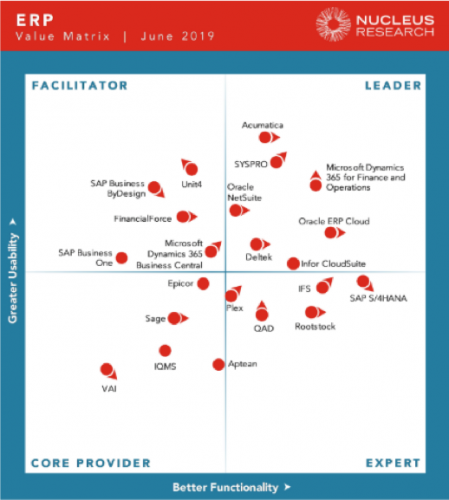
Choosing the right modern cloud ERP partner shapes how your manufacturing operation runs for years to come. The wrong match can mean missed deadlines, stalled implementations, and months of lost productivity. The right partner brings clarity to your ERP selection, keeps your go-live on schedule, and stays with you long after implementation wraps up.
Aqurus delivers Acumatica Cloud ERP to Canadian manufacturers through a structured, consultative approach built around your specific production workflows. This guide compares six modern cloud ERP partners so you can evaluate each one against the criteria that matter to your operation.
Quick guide: 6 best modern cloud ERP partners for Canadian manufacturers
- Aqurus: The best cloud ERP partner for Canadian manufacturers needing a Gold Certified Acumatica implementation with deep local expertise
- Microsoft Dynamics 365 partners: Cloud ERP with native Office 365 and Azure integration for organizations already on the Microsoft stack
- Epicor Kinetic partners: Cloud ERP with detailed job costing and production scheduling for discrete and engineer-to-order shops
- Oracle NetSuite partners: Cloud-native ERP with multi-entity consolidation for manufacturers operating across multiple subsidiaries
- Odoo partners: Modular open-source cloud ERP with a lower entry point for smaller manufacturing operations
- SAP Business One partners: Cloud ERP with multi-currency and localized compliance for manufacturers with international operations
How we chose the best modern cloud ERP partners for Canadian manufacturers
Finding an ERP partner who understands your shop floor, your regulatory environment, and your growth plans takes more than scanning a vendor directory. We evaluated each partner type against criteria that directly affect your implementation success and long-term operational results.
- Canadian market knowledge: Does the partner understand provincial tax rules, Canadian compliance standards, and the competitive pressures unique to domestic manufacturers?
- Manufacturing depth: Can the partner configure BOMs (Bill of Materials), routings, MRP (Material Requirements Planning), and shop floor controls specific to your production method?
- Cloud architecture: Is the ERP fully cloud-native with web-based access, mobile capability, and automatic updates that keep your system current?
- Implementation track record: Has the partner delivered on-time, on-budget ERP projects for manufacturers of similar size and complexity?
- Post-go-live support: Does the partner commit to ongoing training, system optimization, and long-term relationship rather than walking away after deployment?
- Licensing model: Does the pricing structure allow you to scale users and functionality without per-seat costs spiralling as your team grows?
The 6 best modern cloud ERP partners for Canadian manufacturers
1. Aqurus: Best overall cloud ERP partner for Canadian manufacturers
Aqurus delivers Acumatica Cloud ERP through a consultative process designed specifically for discrete manufacturers across Western Canada. The approach starts with a discovery phase that maps your current systems, workflows, and operational bottlenecks before any configuration work begins.
From there, Aqurus designs and deploys a tailored ERP solution that unifies inventory, production, finance, and reporting into a single, real-time platform. This structured methodology has delivered measurable results. Envent Engineering, a sulfur analyzer manufacturer for the oil and gas industry, quadrupled production capacity from 2 units to 20 units in a 12-week period after implementing Acumatica with Aqurus.
Aqurus connects your manufacturing challenges to specific Acumatica capabilities, covering everything from BOM management and routing to MRP and advanced planning and scheduling (APS). With offices across Calgary, Edmonton, Vancouver, and Kelowna, Aqurus gives you local access to consultants who know your market.
Aqurus features
- Consumption-based licensing: Add shop floor workers, material handlers, and shipping clerks to the system without per-user fees increasing your costs as you grow
- End-to-end manufacturing modules: Manage BOMs, routings, MRP, production scheduling, and shop floor data collection in one connected platform
- Real-time cost tracking: Compare actual vs. standard production costs with job costing, labour tracking, and variance analysis for stronger margin control
- Multi-mode production support: Run make-to-order, engineer-to-order, assemble-to-order, batch process, and mixed-mode manufacturing on a single system
- Mobile and web-based access: Give your team role-based dashboards accessible from any device with internet, keeping field and office teams connected
- Open API ecosystem: Integrate with Shopify, BigCommerce, Amazon, Power BI, EDI, and CAD/PLM tools through prebuilt connectors and standard REST APIs
Aqurus pros and cons
Pros:
- Gold Certified Acumatica partner with offices across four Western Canadian cities, giving you direct local support for implementation and ongoing service
- Consumption-based licensing eliminates per-user fees, so you can add unlimited users as your team scales without cost surprises
- Structured implementation methodology backed by measurable client results, including clients who reduced month-end close time by up to 86%
- Aqurus achieved outstanding 2026 Acumatica customer survey results
Cons:
- Aqurus focuses on Western Canada, so manufacturers in Eastern provinces may need to coordinate remotely for on-site support
- Acumatica's breadth of modules means initial setup requires careful scoping to match your specific production workflows
- Manufacturers with very basic operations (fewer than 10 employees with minimal inventory) may not need the full depth of Acumatica's manufacturing suite
2. Microsoft Dynamics 365 partners: Cloud ERP with native Microsoft integration
Microsoft Dynamics 365 Business Central connects your ERP to the Office 365 tools your team already uses. If your organization runs on Outlook, Teams, Excel, and Power BI, Business Central keeps financial and operational data accessible inside those familiar applications.
The modular architecture lets you start with core financials and inventory, then add production management, project accounting, or warehouse features as your operations grow. Partner availability across Canada is broad, with implementation firms in most major cities.
Microsoft Dynamics 365 features
- Native Microsoft ecosystem: Access ERP data directly from Outlook, Teams, and Excel without switching between applications
- AI-powered inventory tools: Copilot agents monitor stock levels, predict shortages, and draft replenishment orders inside your existing workflow
- Modular expansion: Add manufacturing, quality management, or advanced scheduling modules as your needs change, without replacing your core system
Microsoft Dynamics 365 pros and cons
Pros:
- Teams familiar with Microsoft products require less training to adopt the ERP interface
- Large network of certified implementation partners across Canada
- Power Platform enables low-code extensions for custom reporting and automation
Cons:
- Per-user subscription model means costs increase directly with headcount
- Advanced manufacturing features (finite capacity scheduling, shop floor data collection) require third-party add-ons or extensions
- Implementation timelines typically run 6 to 12 months depending on scope and customization
3. Epicor Kinetic partners: Cloud ERP built for complex discrete manufacturing
Epicor Kinetic targets metal fabricators, machinery builders, and engineer-to-order operations where production complexity runs high. The platform's "Get Details" functionality pulls BOMs and methods from previous jobs into new estimates, which speeds up quoting for custom work.
Job costing and engineering change control are built into the core system. Epicor is transitioning all customers to cloud deployment, with on-premise development ending in 2028.
Epicor Kinetic features
- Job estimation tools: Copy BOMs and methods from prior jobs to generate faster, more accurate quotes for custom manufacturing
- Engineering change control: Track revisions to BOMs and routings with full audit trails and approval workflows
- Production scheduling: Manage work centres, labour assignments, and material availability through finite capacity scheduling
Epicor Kinetic pros and cons
Pros:
- Deep discrete manufacturing functionality covering job costing, engineering changes, and shop floor tracking
- Cloud and on-premise deployment options available during the transition period
- Industry-specific configurations for metal fabrication, industrial equipment, and custom manufacturing
Cons:
- The browser-based cloud interface is still maturing, and some workflows may differ from the traditional desktop version
- Per-user licensing applies, which increases costs as more team members need system access
- Implementation complexity typically requires specialized Epicor consultants and 6 to 12 months of project time
4. Oracle NetSuite partners: Cloud-native ERP for multi-entity manufacturers
Oracle NetSuite's OneWorld edition handles multi-subsidiary operations, multi-currency transactions, and consolidated financial reporting across locations. The platform was built as a cloud system from day one, which means no on-premise infrastructure to maintain.
For manufacturers operating across Canadian provinces or expanding into the U.S. market, NetSuite's real-time dashboards give executives instant visibility without requiring a large finance team to generate reports.
Oracle NetSuite features
- Multi-entity management: Consolidate financials across subsidiaries, facilities, and international operations in one system
- Real-time dashboards: Track KPIs across all locations with configurable executive-level reporting
- Unified data model: Run production, inventory, accounting, and CRM on a single platform to eliminate double data entry
Oracle NetSuite pros and cons
Pros:
- Cloud-native architecture with no on-premise infrastructure to manage
- Handles multi-currency and multi-subsidiary consolidation natively
- Over 37,000 installations globally, with a broad integration marketplace
Cons:
- Generally positioned in the higher investment range for SMB ERP solutions
- Customization relies on SuiteScript development, which requires specialized technical skills
- The Canadian partner network is more concentrated in major metropolitan areas
5. Odoo partners: Modular open-source cloud ERP for smaller manufacturers
Odoo uses a modular approach that lets you start with core manufacturing, inventory, and accounting apps, then add modules gradually as your operations mature. The open-source community edition is available at no license cost, while the enterprise edition adds support and hosting.
For Canadian manufacturers with straightforward production workflows and smaller teams, Odoo offers a stepping-stone into structured ERP without a large upfront commitment.
Odoo features
- Modular app library: Pick from dozens of apps covering manufacturing, inventory, accounting, CRM, and more, adding only what you need
- Open-source flexibility: The community edition lets you test and configure the platform before committing to enterprise licensing
- Basic MRP: Manage BOMs, work orders, and material planning for straightforward production environments
Odoo pros and cons
Pros:
- Lower entry cost compared to most mid-market cloud ERP platforms
- Modular structure allows gradual adoption as your operations grow
- Active community of developers contributing extensions and integrations
Cons:
- Advanced manufacturing capabilities (finite scheduling, APS, multi-level BOM management) require custom development or third-party extensions
- Partner quality and availability in Canada varies by region
- Multi-entity consolidation and advanced financial reporting features are limited compared to mid-market ERP platforms
6. SAP Business One partners: Cloud ERP with global compliance for manufacturers
SAP Business One targets structured SMBs that need localized tax compliance, multi-currency handling, and financial controls across international operations. The SAP brand carries recognition among organizations that value vendor stability and long-term platform support.
For Canadian manufacturers exporting products or managing suppliers in multiple countries, Business One handles cross-border regulatory requirements natively.
SAP Business One features
- Multi-currency and localization: Manage transactions, tax rules, and regulatory reporting across different countries from one platform
- Financial controls: Track costs, budgets, and profitability with structured reporting and audit-ready records
- Production module: Handle BOMs, resource planning, and production orders for discrete manufacturing environments
SAP Business One pros and cons
Pros:
- Localized compliance for Canadian tax rules and international trade requirements
- SAP's global infrastructure and partner ecosystem offer long-term platform stability
- Structured financial reporting capabilities suited for organizations with formal governance needs
Cons:
- Customization follows SAP development patterns, which require specialized consultants rather than business-user configuration
- Implementation timelines can extend 6 to 12 months depending on scope and regulatory complexity
- The system is more structured in its design, which limits flexibility for rapid process changes compared to cloud-native platforms
Comparison table: The best modern cloud ERP partners for Canadian manufacturers
| ERP Partner | Consumption-Based Licensing | Built-In APS | Multi-Mode Manufacturing |
|---|---|---|---|
| Aqurus (Acumatica) | ✓ | ✓ | ✓ |
| Microsoft Dynamics 365 | ✗ | ✗ | ✗ |
| Epicor Kinetic | ✗ | ✓ | ✗ |
| Oracle NetSuite | ✗ | ✗ | ✗ |
| Odoo | ✗ | ✗ | ✗ |
| SAP Business One | ✗ | ✗ | ✗ |
How do you evaluate an ERP implementation partner for manufacturing?
Your ERP partner's manufacturing knowledge matters more than their general IT credentials. A partner who has configured BOMs, routings, and MRP for production environments similar to yours will anticipate challenges that a generalist firm cannot.
Ask each partner to walk through a recent manufacturing implementation from start to finish. Pay attention to how they handled data migration from your current system, how they trained shop floor workers, and whether they committed to post-go-live support. Partners who maintain long-term client relationships typically deliver stronger outcomes than those who move on after deployment.
According to a 2026 guide by Groupe Conseil ERA, the difference between ERP partners often comes down to ecosystem compatibility, industry-specific functionality, and long-term growth support rather than brand recognition alone.
What should Canadian manufacturers look for in a cloud ERP platform?
Canadian manufacturers face specific operational pressures that your cloud ERP platform needs to address. Labour shortages, cross-border trade complexity, and rising material costs all require real-time visibility into production, inventory, and finance data.
Prioritize a platform that handles your production method natively. If you run make-to-order or engineer-to-order workflows, your ERP needs configurable BOMs, revision control, and project-based costing. If you operate across multiple facilities, look for multi-site inventory management and consolidated reporting.
Cloud-native architecture delivers automatic updates, anywhere access for remote teams, and reduced IT infrastructure costs. Based on analysis from Top10ERP.org's 2026 manufacturing ERP report, mid-sized manufacturers typically see positive returns within 12 to 18 months through reduced inventory carrying costs, less manual data entry, and improved on-time delivery.
Why Aqurus is the best modern cloud ERP partner for Canadian manufacturers
Aqurus connects your manufacturing operation to Acumatica Cloud ERP through a process built around your actual workflows, not a generic template. That consultative approach has produced measurable results for Canadian manufacturers, including a client that quadrupled production capacity and another that reduced order fulfillment time by 100 hours per week.
What separates Aqurus from other ERP partners is the combination of Gold Certified Acumatica expertise, local Western Canadian presence, and consumption-based licensing that lets you add users freely as your team grows. Aqurus gives you a manufacturing-focused ERP implementation with ongoing support long after your system goes live.
Ready to See Acumatica In Action? Let's Discuss Your Goals Today
Since 2010, Aqurus Solutions has been bringing business management software solutions to clients across Western Canada. We recognize how to match your journey to success with the tools to get there. Aqurus is an Acumatica Gold Certified partner serving Calgary, Edmonton, Vancouver, and Kelowna.
FAQs about best ERP partners for Canadian manufacturers
What makes a cloud ERP partner different from a software vendor?
A cloud ERP partner handles implementation, configuration, training, and ongoing support specific to your business. Aqurus, for example, maps your manufacturing workflows before configuring Acumatica to match your production needs. A vendor typically sells the software license without that hands-on guidance.
How long does a typical cloud ERP implementation take for a Canadian manufacturer?
Implementation timelines vary by complexity, but most mid-sized manufacturing projects with Aqurus follow a structured methodology that keeps your go-live on schedule. Simpler deployments can finish in a few months, while multi-site or heavily customized projects may take longer.
Can Aqurus support manufacturers outside of Western Canada?
Aqurus serves clients from offices in Calgary, Edmonton, Vancouver, and Kelowna. Remote collaboration and cloud-based tools make it possible to support manufacturers across Canada, though on-site visits are most convenient for Western Canadian operations.
What is consumption-based ERP licensing?
Consumption-based licensing means your ERP cost is tied to the computing resources you use rather than the number of individual user logins. Aqurus delivers Acumatica on this model, so you can give every shop floor worker, warehouse handler, and office team member access without per-user fees adding up.
How do I know if my manufacturing operation is ready for a cloud ERP?
If your team spends hours reconciling data across disconnected spreadsheets, your inventory counts don't match reality, or your month-end close takes weeks, a cloud ERP can address those challenges. Aqurus starts every engagement with a discovery phase to assess your current state and build a roadmap.